Compound interest explained with real examples
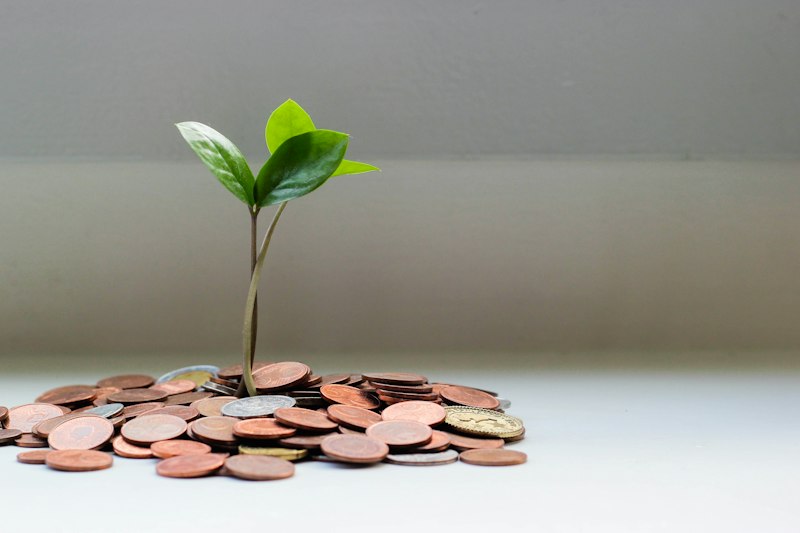
Albert Einstein is often credited with calling compound interest the eighth wonder of the world. Whether or not he actually said it, the idea captures something true: compound interest is one of the most powerful forces in finance, and it works whether you are saving or borrowing. Understanding it can change how you think about money.
Simple vs compound interest
Simple interest is calculated only on your original principal. If you invest $10,000 at 5% simple interest, you earn $500 every year, year after year. Compound interest is calculated on your principal plus all the interest you have already earned. In the same scenario, you earn $500 the first year, then 5% on $10,500 ($525) the second year, then 5% on $11,025 ($551.25) the third, and so on. The growth accelerates because each year's interest earns its own interest.
The compound interest formula
The core formula is A = P(1 + r/n)^(nt), where A is the final amount, P is the principal, r is the annual rate, n is the number of times interest compounds per year, and t is the number of years. The more frequently interest compounds, the faster your money grows. Daily compounding beats monthly, which beats annual.
A real savings example
Suppose you invest $5,000 at 7% annual interest, compounded monthly, and leave it alone. After 10 years you would have about $10,070, more than doubling your money. After 30 years, you would have about $40,600. The original $5,000 earned $5,070 in the first decade but more than $30,000 over three decades. That acceleration is the magic of compounding: the longer your time horizon, the more dramatic the effect.
Why starting early matters more than amount
Time matters more than the size of your contributions. Compare two savers: one invests $2,000 a year from age 25 to 35 ($20,000 total) and then stops; the other waits until 35 and invests $2,000 a year until 65 ($60,000 total). At a 7% return, the early saver ends up with more at age 65, about $303,000 versus $245,000, despite contributing a third as much. The extra ten years of compounding outweigh three decades of larger contributions.
The dark side: compounding on debt
Compound interest works against you just as powerfully when you borrow. Credit card debt is the classic example. A $5,000 balance at 20% interest, making only minimum payments, can take more than 20 years to pay off and cost more than $7,000 in interest alone. The same force that builds wealth slowly erodes it when you carry high-interest debt. Paying off expensive debt is effectively a guaranteed, tax-free return.
How to make compounding work for you
- Start as early as you can, even with small amounts.
- Reinvest your earnings rather than withdrawing them.
- Choose accounts that compound frequently.
- Be patient. Compounding is a long game, and the biggest gains appear in the later years.
- Avoid interrupting the process by cashing out during market dips.
- Steer clear of high-interest debt that reverses the math.
The takeaway
Compound interest rewards time and consistency above all else. The earlier you start and the longer you stay invested, the more dramatically your money can grow. The same principle makes high-interest debt so destructive, so pay it down first, then let compounding do the heavy lifting on your savings.
Try the related tool
Compound Interest Calculator